Understanding AI Automation in Islamic Centres and Masjids
Artificial intelligence (AI) is increasingly being integrated into various spheres of life, including religious settings like Islamic centres and masjids. The goal is to support and simplify religious practices through practical technological applications. AI automation helps automate routine but essential tasks, freeing up time for Islamic centre staff and allowing worshippers to focus more fully on their spiritual activities. In mosques such as the Grand Mosque in Mecca, AI-powered robots assist by reciting Quranic verses and delivering sermons, demonstrating how technology can be harnessed respectfully within Islamic traditions. These solutions extend beyond mere novelty, addressing specific needs of prayer timing, religious education, and community administration.
This practical approach highlights how AI is not merely a tool for innovation but a resource to enhance the religious experiences and operational efficiency of Islamic centres.
AI Tools for Prayer Scheduling and Notifications
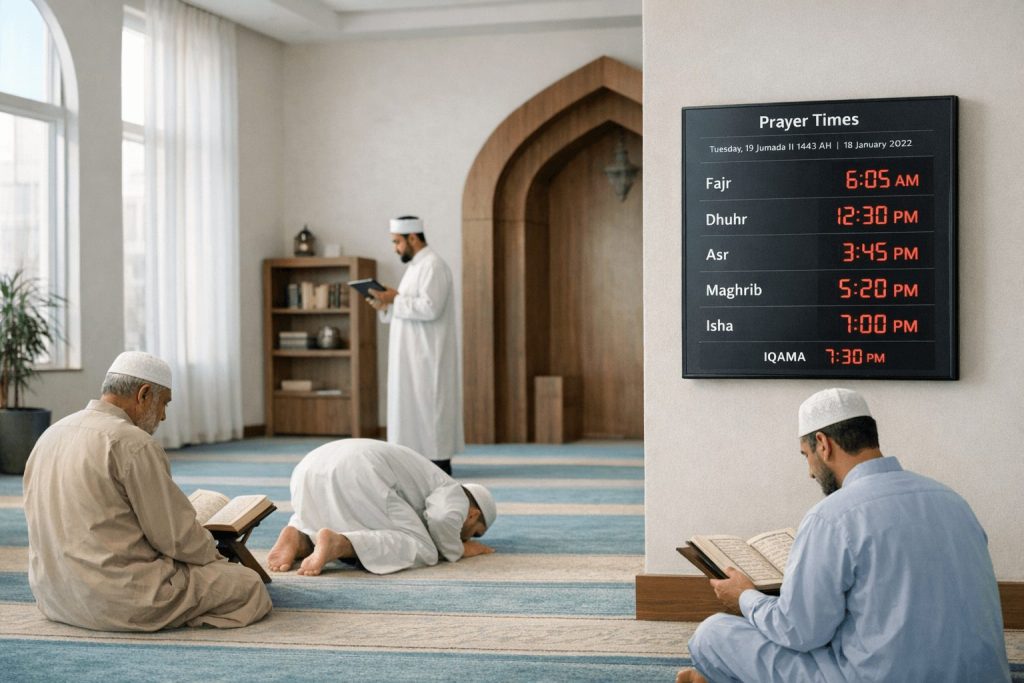
One vital area where AI has practical use is in managing prayer scheduling. Automated AI systems accurately calculate prayer times based on geographical location, the date, and local factors, which is essential as prayer times shift daily. These systems can then notify congregants with timely reminders through mobile apps, mosque digital boards, or SMS alerts.
By automating event scheduling, including special prayers during Ramadan or Eid celebrations, AI ensures that communities stay well-informed and can participate fully. These prayer scheduling tools reduce manual errors and free staff from having to update timetables constantly. This accuracy and efficiency improve adherence to prayer times, fulfilling an important aspect of Islamic worship.
AI-Powered Support for Quranic Recitations and Sermons
AI-enabled technologies support Quranic recitations by providing digital assistants and robots that can recite Quranic verses with correct tajweed (pronunciation rules). This offers an aid both for individuals learning the Quran and for masjids that want to offer accessible religious services even when a qualified reciter is unavailable.
Robots stationed in masjids like those in Mecca can also deliver sermons, providing consistent religious messages in multiple languages. Additionally, AI can assist imams by suggesting sermon topics based on current events or community needs, enriching the spiritual engagement with worshippers. These applications show the potential for AI to uphold religious authenticity while making services more inclusive.
Enhancing Community Engagement Through AI Communication
AI chatbots and virtual assistants play a valuable role in handling common religious questions, providing Quran translations, and supporting educational queries. These AI systems can operate 24/7, offering immediate responses to community members who seek guidance on matters such as prayer rules, fasting requirements, or zakat calculations.
Such AI communication tools help community members feel connected and supported outside of mosque hours. They can bridge language gaps through automatic translation services, making resources accessible to diverse linguistic groups within Islamic communities. This use of AI strengthens community engagement by offering timely and reliable assistance.
Streamlining Administrative Tasks with AI
Administrative duties can demand considerable time for Islamic centres, including tasks like staff scheduling, attendance logging, and resource management. AI-based solutions can automate these processes to save significant labour hours.
For example, AI can track volunteer shifts, organise meeting schedules, and manage inventory for mosque facilities, reducing the chance of human error and freeing administrators to focus on more strategic priorities. These efficiencies improve the overall running of the masjid and contribute to a better experience for both staff and congregants.
Addressing Privacy, Ethics, and Cultural Considerations
Introducing AI into religious spaces must be handled with great care, respecting ethical, privacy, and cultural dimensions. Since masjids are places of spiritual reflection, it is crucial to ensure that AI tools do not compromise confidentiality or the sanctity of worship. Data privacy must be strictly maintained, especially concerning any personal data collected through AI applications.
Culturally, AI solutions should align with Islamic principles and traditions, avoiding roles or behaviour that could be perceived as disrespectful. Transparency in how AI is used and involving community leaders in decisions helps build trust and acceptance. Ethical implementation means prioritising human values and religious sensitivities alongside technology benefits.
Frequently Asked Questions about AI Automation in Islamic Centres and Masjids
1️⃣ What kind of AI is currently used in mosques?
AI technologies such as automated prayer time calculators, AI chatbots for religious queries, Quran recitation robots, and AI tools for administrative tasks are already in use in some mosques worldwide.
2️⃣ Can AI replace human imams or religious teachers?
AI is designed as a support tool rather than a replacement for human religious leaders. It assists by providing information, reminders, and services but does not substitute the human connection and guidance essential in faith communities.
3️⃣ How does AI handle privacy in Islamic centres?
Responsible AI use involves securing personal data, limiting data collection to what is necessary, and ensuring transparent data policies to maintain community trust and respect religious sensitivities.
4️⃣ Is AI automation expensive for small Islamic centres?
Costs vary, but many AI tools are scalable and can be tailored to different budgets. Some basic prayer scheduling and notification systems are affordable for smaller centres, making AI accessible widely.
5️⃣ How can AI support multilingual Islamic communities?
AI-powered translation and natural language processing enable communication in multiple languages, enhancing accessibility to religious content for diverse worshippers.
If your Islamic centre or masjid is considering practical AI automation to improve your operations and community services, Ummah Design can help. We specialise in tailored digital solutions that streamline administration and enhance religious engagement, saving you time and effort so you can focus on your community’s spiritual growth.