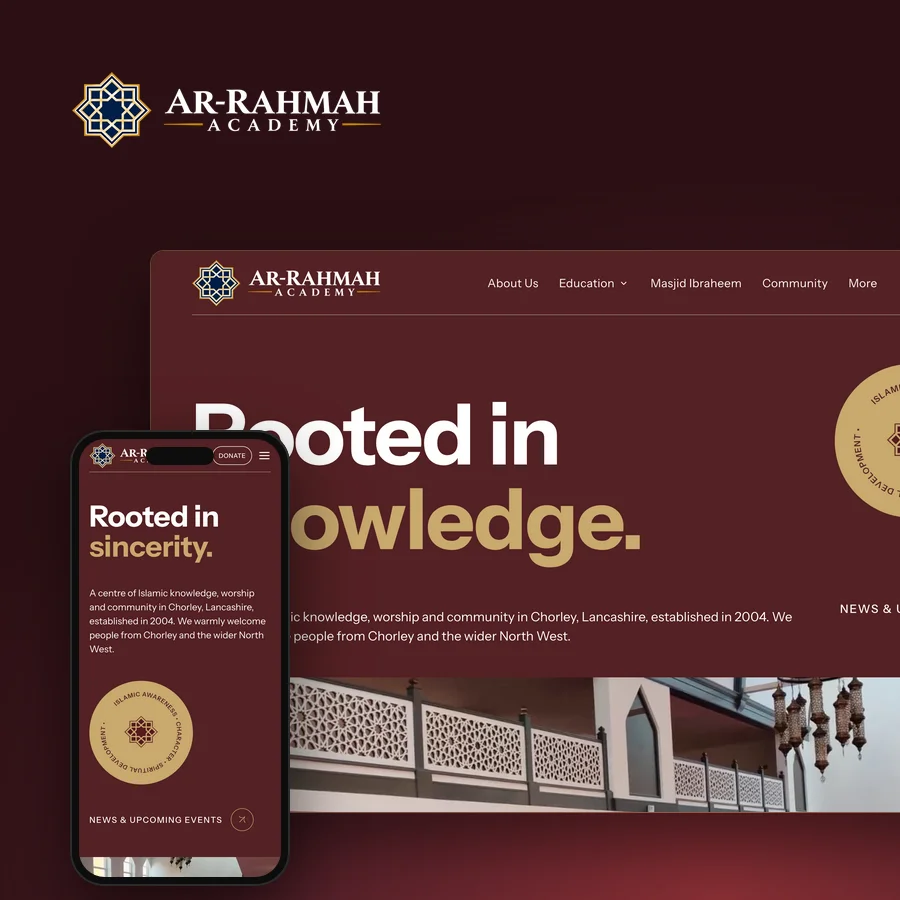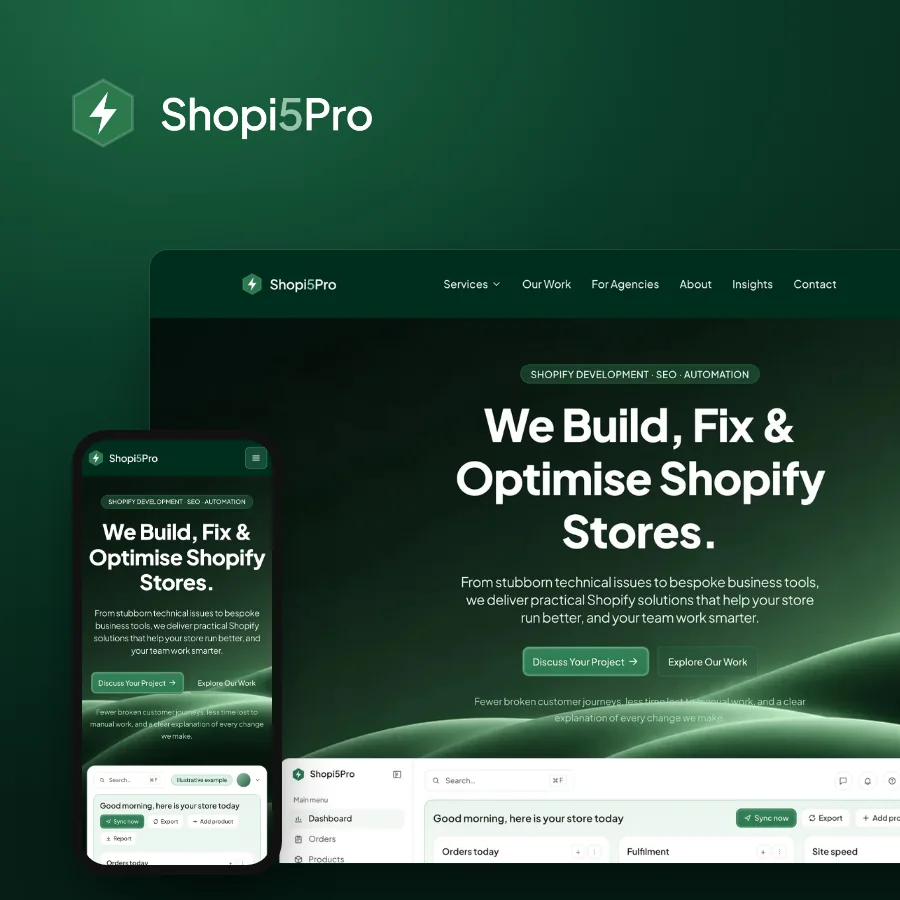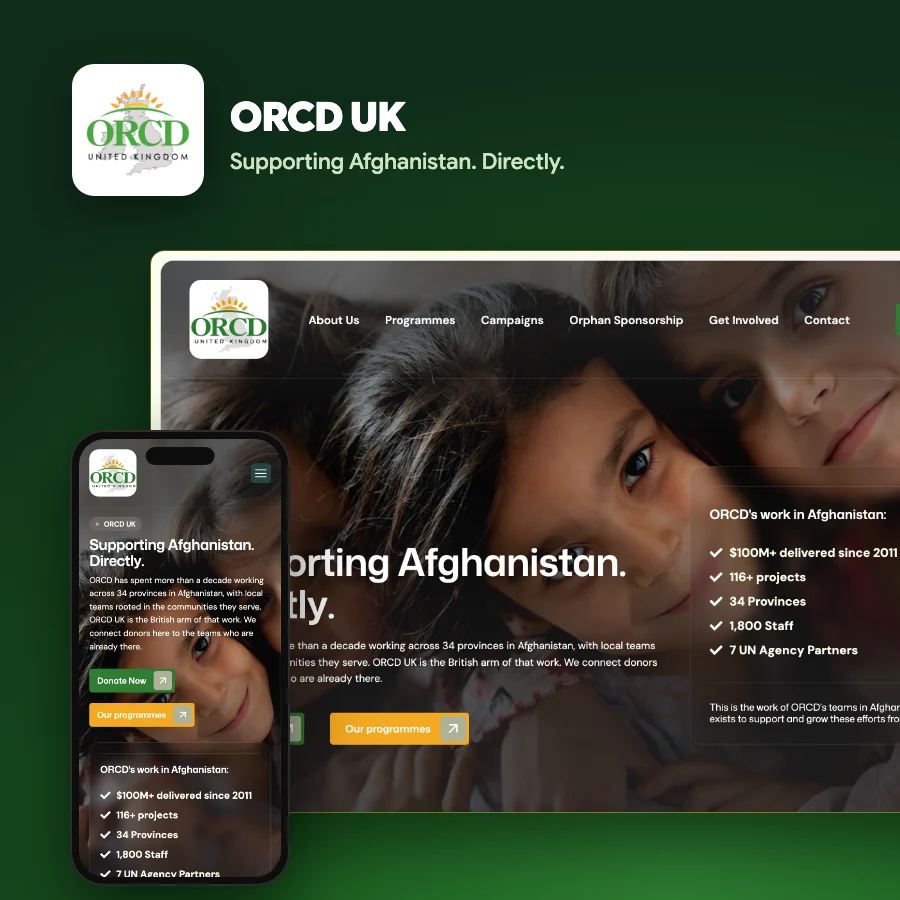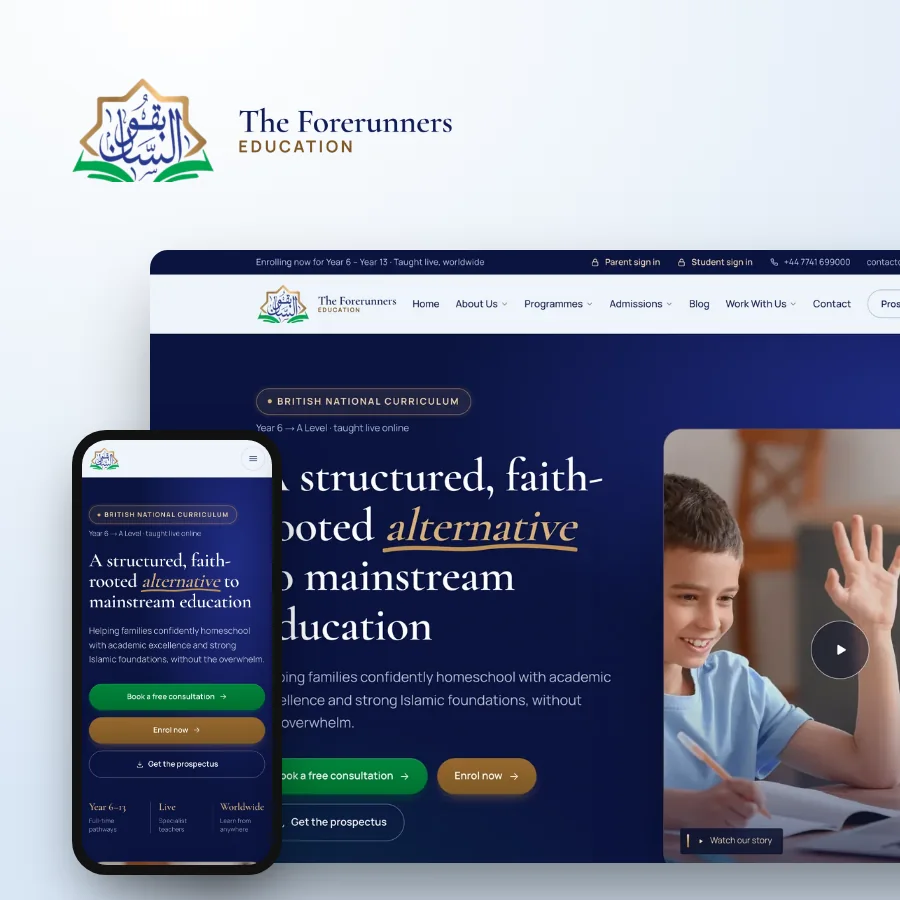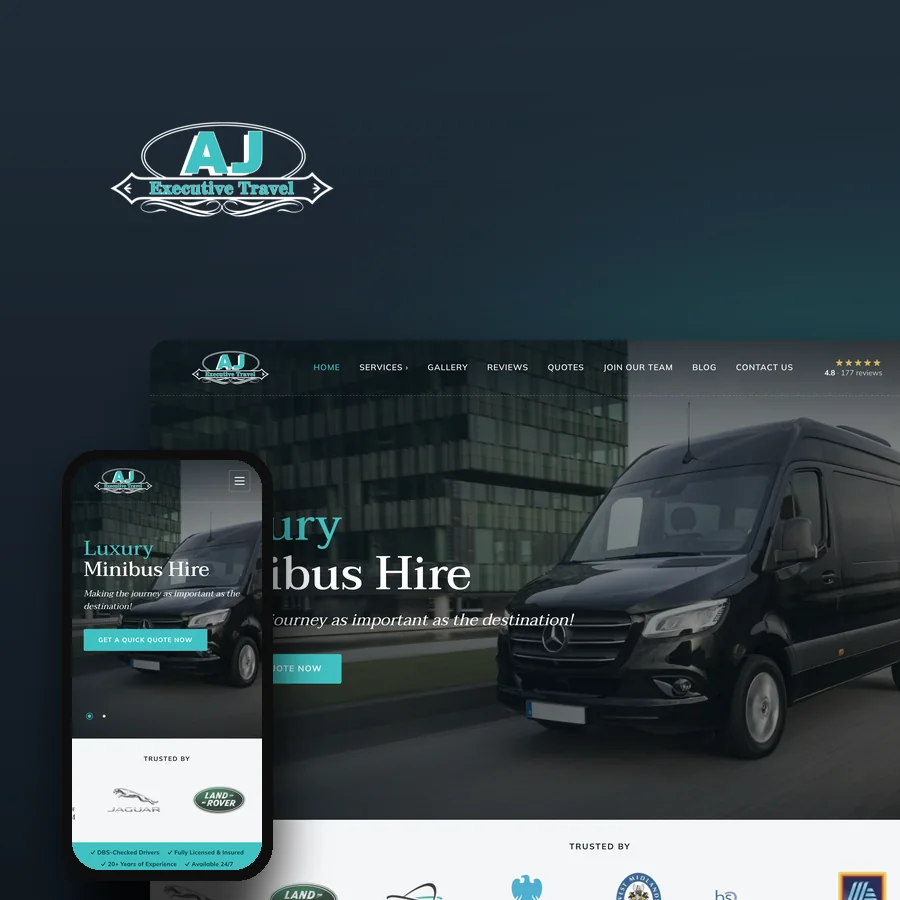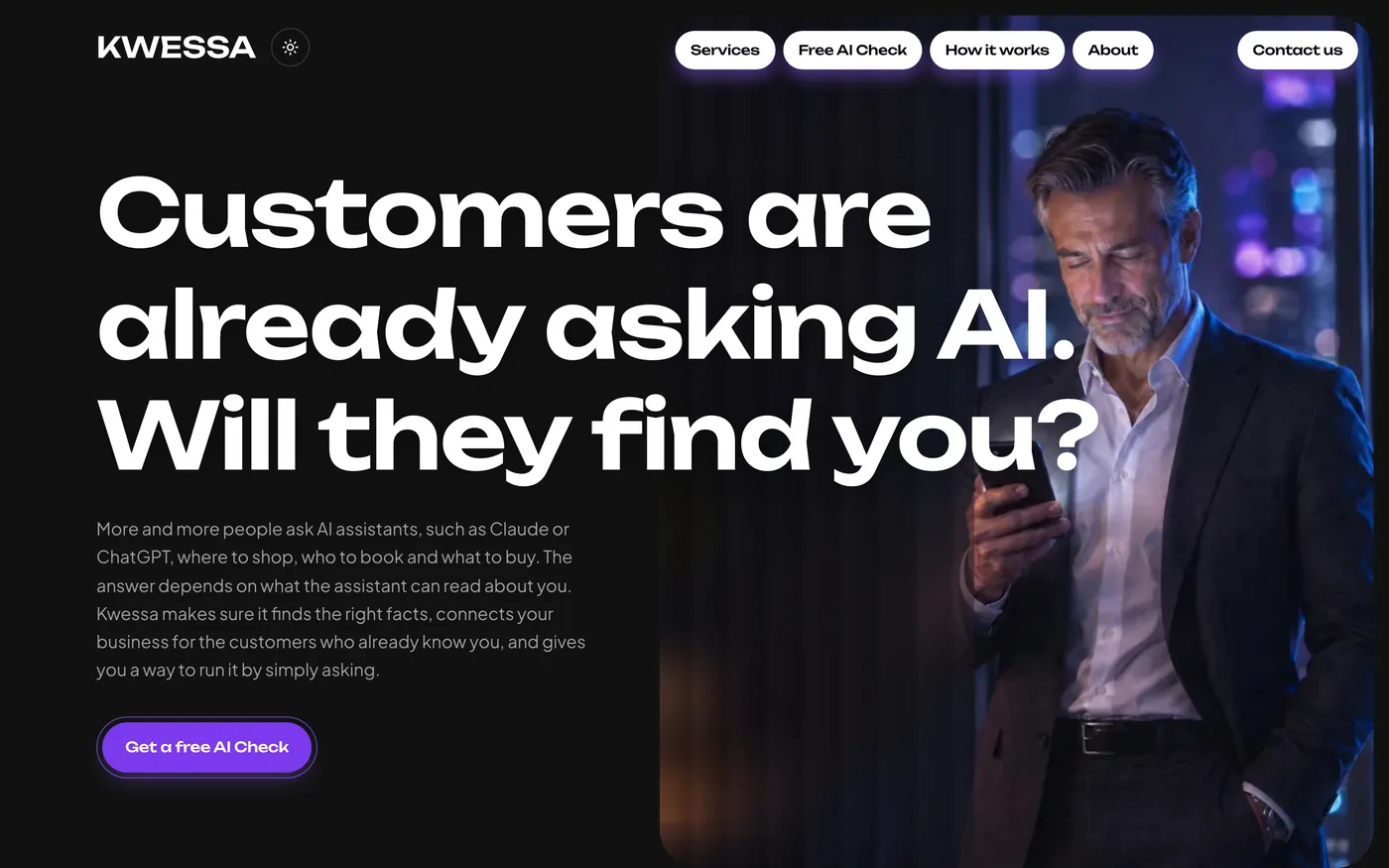
Kwessa is a new UK agency. It checks what ChatGPT, Gemini and Google’s AI Mode say about a business, fixes the facts those assistants read, and connects businesses to Claude and ChatGPT. That’s a lot to explain to a busy owner. We designed and built the website: ten service pages, a free AI Check anyone can request, a sample report, a blog, and light and dark modes. It went live at kwessa.com on 10 November 2026.

WHAT WE BUILT
A short request form for the agency’s free offer. It asks only what a check needs, and quietly blocks spam and repeat requests.
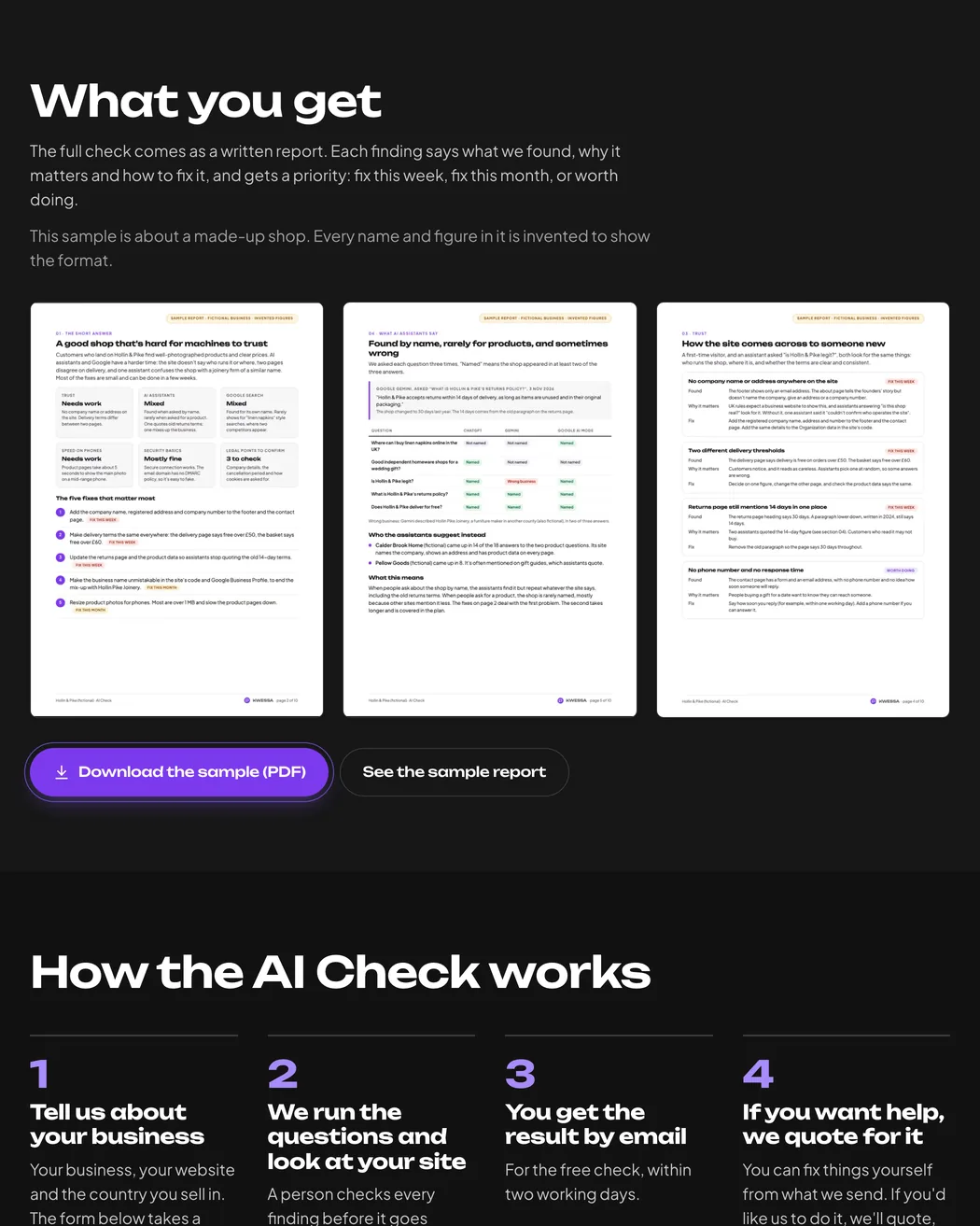
A 10-page sample report about a made-up shop, as a PDF with page previews, so visitors see exactly what a check gives them.
A page for each service, each with a plain name first and the technical term underneath, and an overview that groups all ten.
Dark violet by default, with a one-tap switch to light mode that the site remembers. Both are checked for easy-to-read contrast.
Plain-English guides for business owners. Drafts stay off the live site until they’re published.
Search details on every page, a sitemap in Search Console, and its own preview image for every page when a link is shared.
Most business owners have never heard of “AI search visibility” or an “MCP connector”. So every service leads with what it does for them, like “Be the business AI assistants can find”, and the technical name sits underneath in small type for anyone who searches for it. The home page opens with one question, “Customers are already asking AI. Will they find you?”, and one button for the free check.
Where an idea is hard to picture, the site shows it as a short chat between a customer and an assistant, about a made-up bakery or shop, and each one is labelled as an example. The look is dark and modern, with Kwessa’s violet and bold Unbounded headings, while the body text uses a calmer typeface that stays easy to read on long service pages.
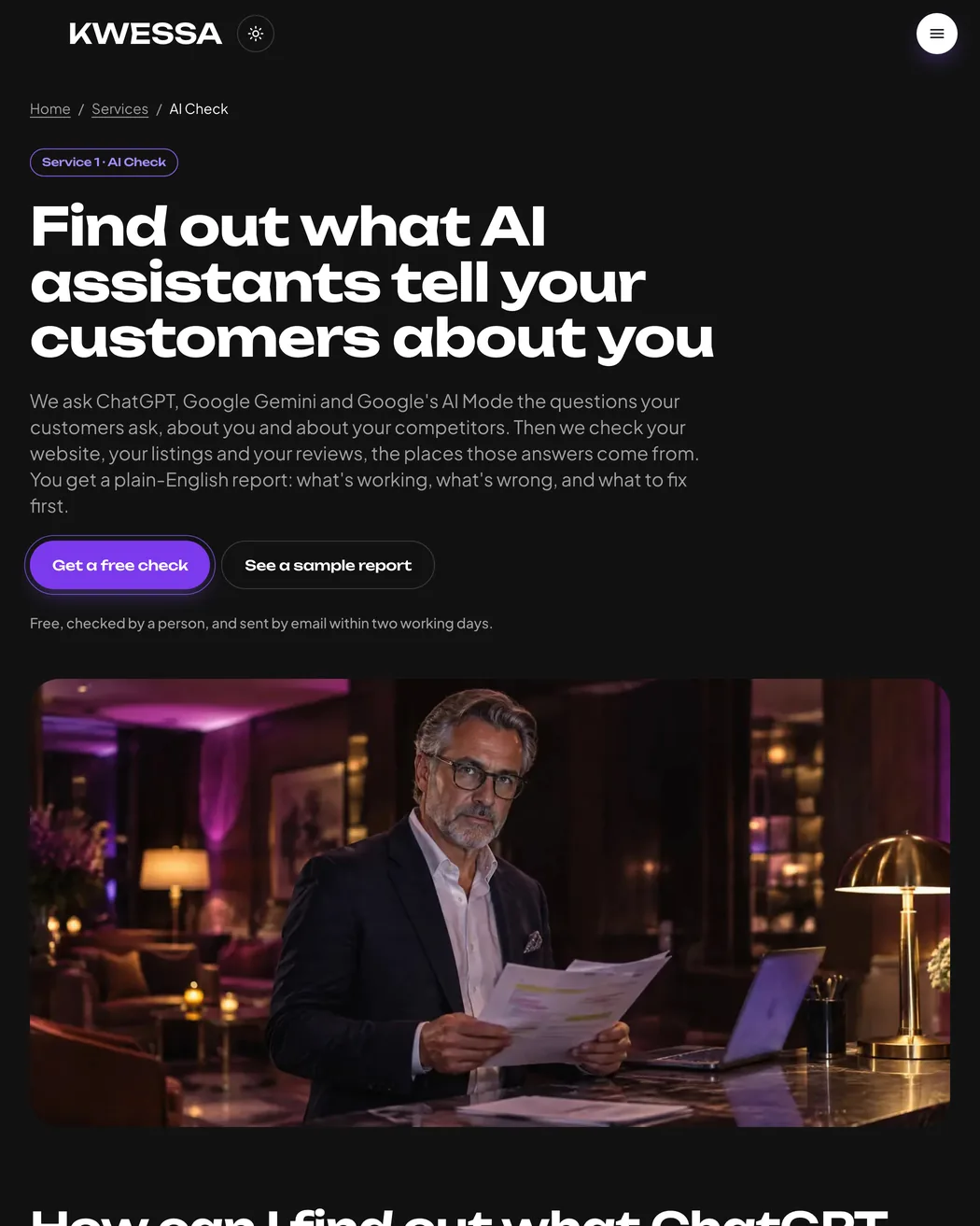
For most visitors the first step is the free AI Check, so the form is short: name, email, business, website, country and what they sell, plus up to three questions their customers ask, if they know them. Each request goes into a private list behind a password, where the Kwessa team marks it new, in progress, sent or declined, and adds notes.
Behind the scenes, each website and each email address gets one free check every 90 days, there’s a daily limit, and spam filters stop automated sign-ups. Visitors’ IP addresses are never stored, and requests that never become work are deleted after 12 months. Next to the form sits the sample report, a 10-page PDF about a fictional shop with invented figures, so nobody has to guess what they’ll get.
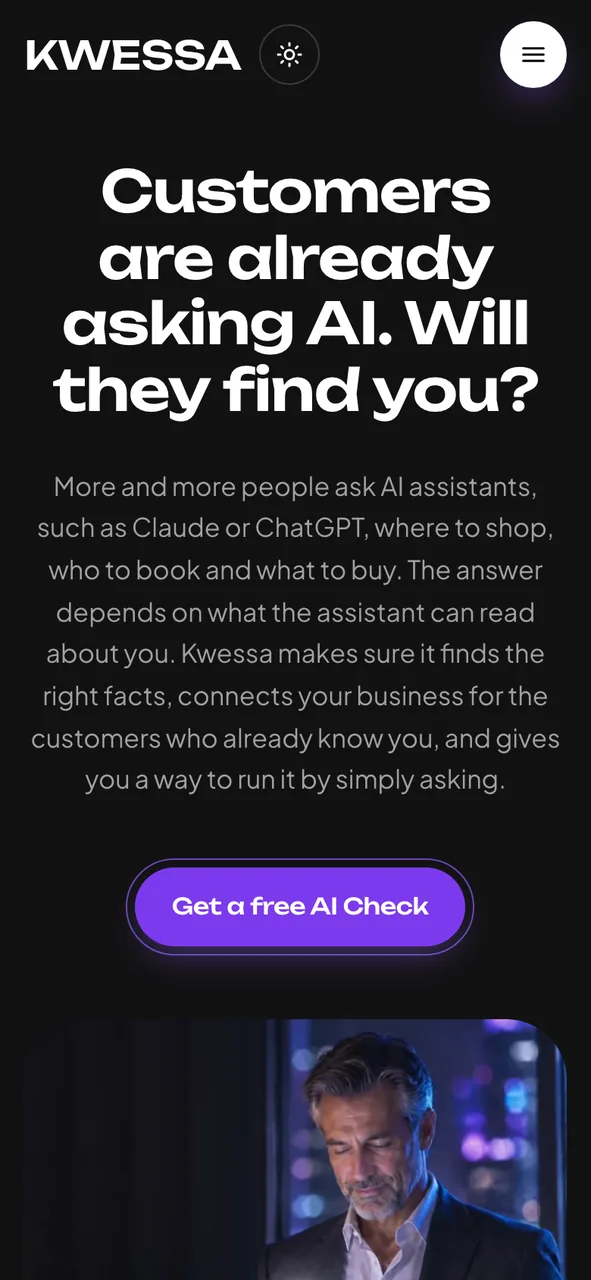
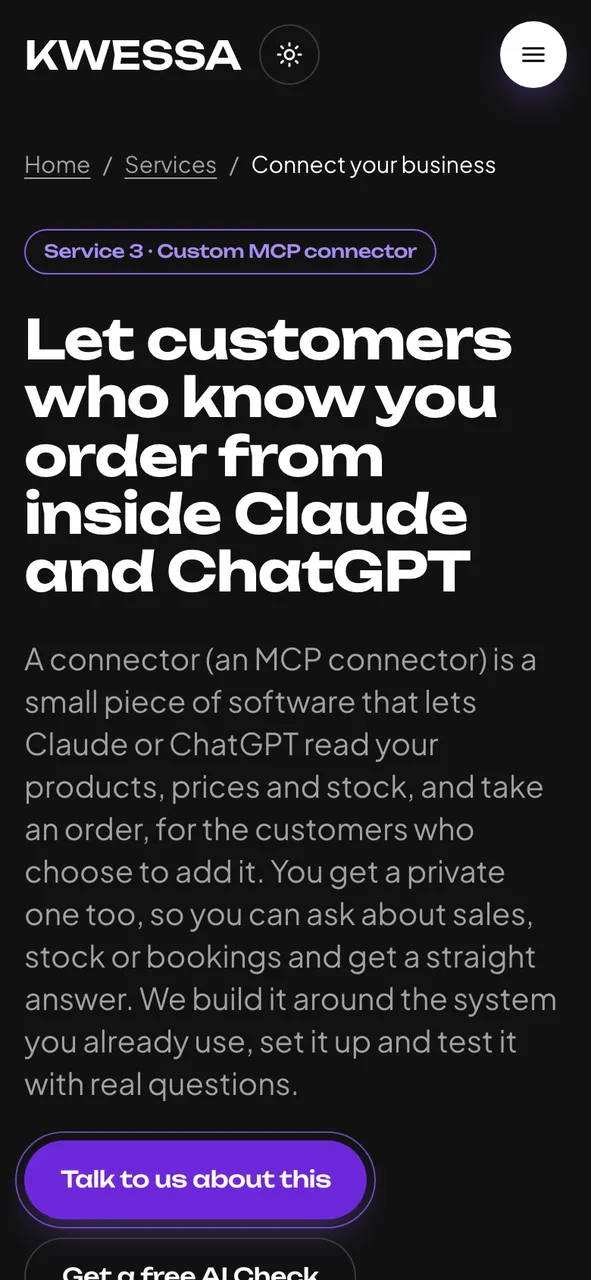
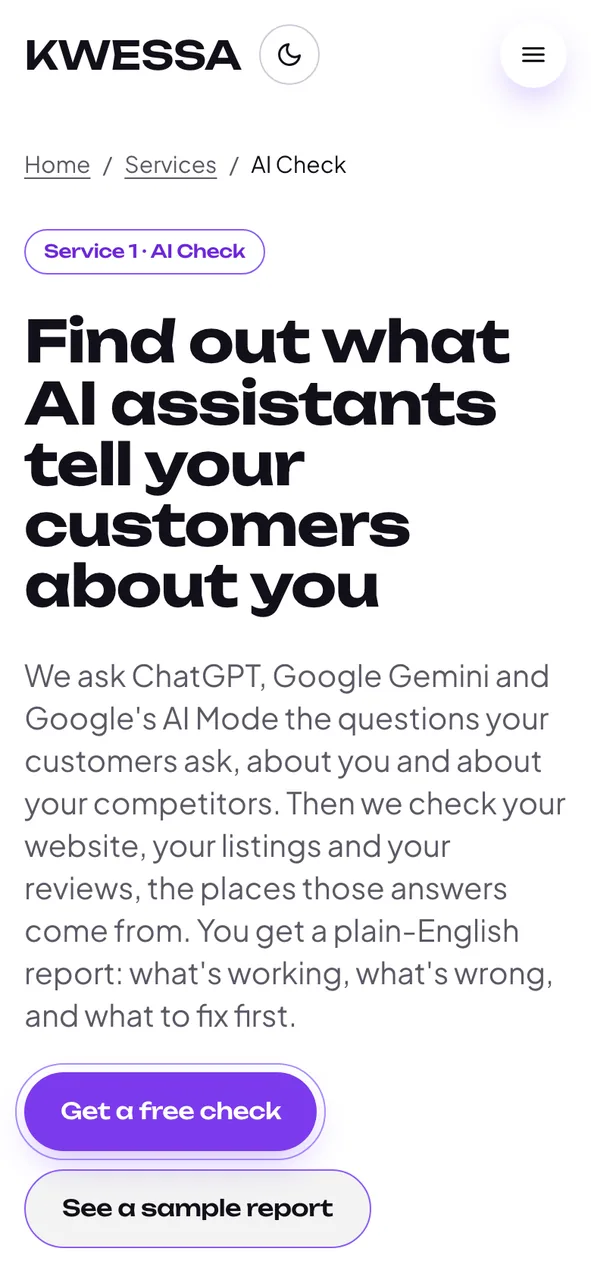
Every public page is built ahead of time, so there’s nothing to put together when someone visits. The slow-moving video behind the home page headline only fades in once it’s actually playing. On a slow connection, or for visitors who ask their phone for less motion, the still picture simply stays. The fonts are trimmed to the letters the site uses.
Google’s Lighthouse test on the live site, 15 November 2026:
These are lab results, not field data. Automated tests also open every page on desktop and on a phone and check it for accessibility problems, and check the wording against the site’s own writing rules, so a later change can’t quietly break either.
kwessa.com
CONTACT US